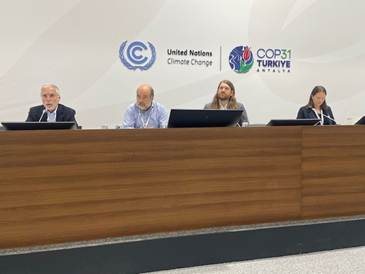
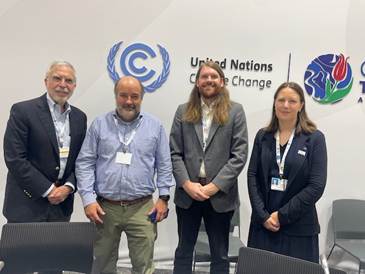
Nearly every year since COP13 in Bali, Indonesia, in 2007, I’ve had the privilege of leading the “Harvard delegation” to the annual Conference of the Parties (COP) of the United Nations Framework Convention on Climate Change (UNFCCC). I did so again last week at COP31 in Antalya, Türkiye, where I was accompanied by Daniel Jacob, professor of atmospheric chemistry at Harvard, Willow Fortunoff, my research assistant, and Jason Chapman, associate director of the Harvard Environmental Economics Program. Our work was exclusively on behalf of the university-wide effort I’m directing – the Harvard Initiative on Reducing on Global Methane Emissions, supported by the Salata Institute for Climate and Sustainability. Before I talk about our engagements at COP31 (with a few photos thrown in), I want to provide my personal assessment of the overall Conference.
Was COP31 a Failure?
If you have read a newspaper, watched TV, or listened to the radio, you have most likely been told that COP31 was a “failure,” due to the fact that there was no agreement on the communique which is issued at the end of each COP. It’s true that there was no agreement. And virtually all press reports indicated that Saudi Arabia and Russia, both petrostates, were to blame, for stopping the inclusion of a statement about moving away from fossil fuels in the “cover statement.”
That’s fair enough, but let’s note that a case could also be made to place the “blame” on the European Union (EU) and like-minded parties. In 2023 at COP28 in Dubai, the final communique surprised many people with a statement of “transitioning away from fossil fuels. But in the three COPs since then, no final cover statement has mentioned fossil fuels. This time, on Sunday morning, 48 hours past the scheduled adjournment, the COP31 co-conveners – Australia and Türkiye – proposed a compromise statement they called the “Antalya Pact,” which did not explicitly mention fossil fuels, in keeping with the 2024 and 2025 outcomes.
This time the EU objected, saying that it could not accept text that did not call for at least the transition away from fossil fuels. This objection was joined by the UK, Norway, and a set of climate-vulnerable countries. On the other side, the Arab Group, the African Group, China, and several developing countries signaled that they were prepared to accept the text as a compromise, despite their own reservations on finance, adaptation, and trade. Neither the EU nor the Saudis would budge, and so the political package the COP Presidencies had hoped to accomplish was not approved.
While the political cover decision was not adopted, progress was made on nearly two dozen key technical decisions, but the headlines focused exclusively – rightly or wrongly – on the lack of a positive outcome with an over-arching political message. Importantly, the Paris Agreement continues to be implemented – with new Nationally Determined Contributions (NDCs) submitted by 195 parties every 5 years, Biennial Transparency Reports (BTRs) submitted every 2 years, and the Second Global Stocktake (GST2) launched at COP31, all of which I discussed in my pre-COP blog post two weeks ago.
COPs Are Neither Successes nr Failures
In any event, the closing cover statements are of limited real significance. As I have written before, having participated in these annual UNFCCC Conferences of the Parties for nearly 20 years, I don’t think the most important outcome of any COP is what is contained in the closing statement, which is essentially a non-binding resolution about future ambitions. I say this despite my recognition that a closing statement about fossil fuels and – more importantly – the press coverage it receives may have some symbolic, signaling value, and can “normalize ideas and measures once seen as too radical to be globally agreed.” Indeed, the language in the closing statements frequently receives the lion’s share of press attention, because the press and many others like to characterize these annual COPs as either “successes” or “failures,” and the closing statement provides a very convenient focal point.
The reality is that the negotiations at most COPs are neither successes nor failures (except perhaps when a new international agreement is enacted, as with the Kyoto Protocol in 1997, and the Paris Agreement in 2015, both legally binding international treaties). Naming any of the negotiations at the twenty-nine other COPs as successes or failures makes no more sense than it would to characterize the annual World Economic Forum meetings in Davos as successes or failures. Both are extensive, complex get-togethers, based on bottom-up processes.
It is not as if the corporate CEOs meeting in Davos agree to take action, and then go home to their respective Boards of Directors to implement their Davos commitments. Of course, the causality runs in precisely the opposite direction. So too with the annual COPs, where the delegations of the various “Parties,” the 195+ countries, bring with them their predisposed domestic priorities and perceptions of acceptable “international cooperation.” Each COP’s official outcome is essentially the aggregation of those.
This is a reminder of the fact that what will drive meaningful action around the world – that is, meaningful cuts in greenhouse gas (GHG) emissions – is the combination of market realities and public policies (with both having impacts on the other). The most important public policies – whether carbon taxes, cap-and-trade instruments, performance standards, or technology standards – have been and will be enacted at the national level, the regional level in the case of the European Union, and sometimes the sub-national level (for example, California). Those policy developments are linked with what happens at the annual COPs, but the direction of causation is fundamentally bottom-up, not top-down.
Important Context: The Evolution of the Annual COPs
It is helpful for a full understanding of what happened and did not happen at COP-31 to reflect on the evolution of the annual COPs since they began with COP-1 in Berlin in 1995, or at least over the 19 years that I’ve been attending these festivities, beginning with COP-13 in Bali, Indonesia, in 2007.
In fact, we need to begin even before COP-1 in 1995, by going back to the UN Conference on Environment and Development that took place in Rio de Janeiro, Brazil, in 1992 and that produced the UNFCCC. The text specifies (in paragraph 6 of Article 7) something quite unusual for a process of ongoing international negotiations, namely that “any body … whether … governmental or non-governmental, which is qualified in matters covered by the Convention, and which has informed the secretariat of its wish to be represented at a session of the Conference of the Parties as an observer, may be so admitted…” Thus, there is an explicit role for observer organizations – largely from civil society (environmental NGOs of all kinds, trade associations, universities, etc.) – in the annual UNFCCC COPs.
Over time, there have been gradual and more recently quite dramatic changes in the relative importance and prominence of the core country delegations of negotiators (typically about 10,000 people) versus “observers” from civil society (recently about 30,000 to 40,000 people, reaching some 80,000 at COP-31 in Antalya). When I first participated in the COPs 19 years ago, I would say that 90-95% of the meaningful action was in the negotiations, with 5-10% among the participants from civil society.
But by the time of COP-28 in 2023, I would peg 10% of the meaningful action as being within the negotiations, and 90% among the myriad events (including official “Side Events,” unofficial presentations and sessions, meetings, and interactions of all kinds) among participants from civil society. Except when there is a legal agreement to be negotiated (Kyoto, Paris), most action is simply outside of the negotiations. You can think of the COP as a circus in which the “main event” is eclipsed with increasing frequency by the “side shows.”
In the words of Somini Sengupta, writing in the New York Times, during COP-28, “there are two climate summits taking place in Dubai. One is the gathering of bleary-eyed, sharp-tongued diplomats parsing over every word and comma” in the closing statement, but “the bigger event is happening outside the negotiating rooms. It’s part trade fair, part protest stage, part debate forum.” Included in the “trade fair” were battery entrepreneurs, solar panel manufacturers, venture capitalists, financial brokers, mining executives, real estate developers, tech startups, green cement manufacturers, construction companies, global food suppliers, fertilizer producers, pharmaceutical companies, and representatives of dozens of other sectors.
Hence, I christened the festivities in Dubai, “Climate Expo 2023”, and since then “Climate Expo 2024” in Baku, Azerbaijan, “Climate Expo 2025” in Belem, Brazil, and this year “Climate Expo 2026” in Antaly, Türkiye. I don’t say this with cynicism or even skepticism, because I recognize, as I stated above, that this is a bottom-up process like the World Economic Forum in Davos each year, and like Davos, the Climate Expo plays a role, indeed a potentially valuable one. Great examples of this have been in the form of events targeting a specific non-CO2 greenhouse gas – methane, which was the focus of my previous blog post. This is another reason why the COPs which now consist of thousands of outcomes ought not to be judged on the basis of a single formal outcome.
But the Perception of Failure May Prove to be Important
Despite the fact that COPs are neither successes nor failures, the broad, popular perception of COP31 as a failure may turn out to be of significance for the immediate future of international climate policy.
Only two previous times – COP6 in The Hague in 2000 and COP15 in Copenhagen in 2009 – did the Conference adjourn without a final agreement. After both of those COPs, there was considerable speculation – and even some serious investigation – of fundamental limitations with the UNFCCC process, such as requiring agreement from 195 countries, when 20 countries and regions (counting the EU as one) account for about 90% of global emissions. Along with this, there were searches for alternative international approaches.
Interestingly, the chief problem with the governance structure at COP15 was the assumption that consensus required unanimity, impossible to achieve. One year later at COP16 in Cancun, Mexican Foreign Minister Patricia Espinosa demonstrated tremendous skill in presiding over the talks. At the end of the two weeks of negotiations when the final communique was being considered, at a critical moment she took note of objections from Bolivia and a few other leftist states, and then ruled that the support of the 193 other countries meant that consensus had been achieved and the Cancun Agreements had been adopted. She pointed out that “consensus does not mean unanimity.” (That compared with COP15 in Copenhagen, where the Danish prime minister allowed objections by five small countries to derail the talks.)
For all intents and purposes, an important precedent was set in Cancun, which persisted until this year when the COP31 leadership may have forgotten that lesson. But so have many press reports, which have argued that a key problem with the UNFCCC is the necessity for unanimity: “the rules of the U.N. climate body require consensus … [which] enables a small group of countries, or even a single nation, to derail a deal.” That is simply not correct – since the day Ms. Espinosa put down the gavel at COP16 in Cancun. Of course, if many people believe that an antiquated rule is an ongoing norm, then in effect it is!
So, the reality is that the perception of failure at COP31 combined with the perception of fundamental flaws (some of which are real!) in the UNFCCC process are now once again opening the door to serious consideration of alternative approaches to making international progress on climate change.
Various forms of “Coalitions of the Willing” will no doubt receive more attention, at least in the short term. In Belém, Brazil, at COP30, the negotiators launched a “Trade-Climate Dialogue” with a two-year work program on how international trade can support equitable climate action.
The European Union had tied trade to climate action with the adoption of the Carbon Border Adjustment Mechanism (CBAM), a means of pricing the greenhouse gas emissions involved in the production of some key commodities the E.U. imports. In effect, CBAM is a CO2 tariff on carbon-intensive products, including iron and steel, aluminum, cement, fertilizers, hydrogen, and electricity. As I wrote at the time, the dialogue on trade launched at COP30 could serve to overcome key objections to the CBAM and encourage other countries to take a similar approach to pricing carbon emissions.
Developing countries are very hostile towards the CBAM, seeing it as a way of keeping developing countries mired in poverty through what is essentially environmental protectionism. The Europeans obviously view it as both necessary for establishing a level playing field, but also as a way of inducing other countries to take on domestic carbon pricing mechanisms in order to escape the tariff when they export those specific bulk products into the European Union.
There was interest expressed from the Brazilian presidency going into the COP30 about something broader than the CBAM: A number of countries putting in place carbon pricing domestic mechanisms—whether it’s a carbon tax or auctioned allowances under cap and trade—keeping the revenue and then putting in place essentially trade barriers like the CBAM on non-participating countries. In other words, expanding the CBAM into something like a carbon pricing club.
I am referring to the “Open Coalition on Compliance Carbon Markets,” proposed by Brazil’s Finance Ministry ahead of COP30, initially with 11 supporting parties (Brazil, China, the European Union, the United Kingdom, Canada, Chile, Germany, Mexico, Armenia, Zambia, and France), and having since expanded to 18 parties.
As I’ve also written about before, a promising potential avenue forward for such a coalition (club) is provided by a proposal from the Global Climate Policy Project at Harvard and MIT, namely “Building a Climate Coalition: Aligning Carbon Pricing, Trade, and Development,” which was the focus of a podcast episode (and related blog essay) featuring Professor Catherine Wolfram of the MIT-Sloan School of Management.
The reason why I find this proposal attractive is that it can be used to address the key challenge expressed by developing countries about being forced to pay CBAM tariffs. Under a proposed carbon-pricing coalition, the price of entry – the required domestic carbon price – could be set proportional to an exporting country’s per capita GDP. Thus, distributional equity could be introduced into the carbon-pricing coalition (while admittedly reducing its cost effectiveness).
Finally, in the context of the EU’s CBAM, I should acknowledge that I was originally skeptical that it would actually induce other countries to put in place carbon pricing mechanisms. But I was wrong, because in fact other countries are engaged in that process. Türkiye has been upfront about the fact that they’re developing a carbon price mechanism for the explicit purpose of not having to pay the CBAM, and several other countries are likewise moving in that direction.
So, that’s my assessment of COP31. I hope it’s of interest and perhaps value.
Personal Activities at COP31 Last Week
I promised at the begging of this essay that after I provided my assessment of COP31, I would provide a quick snapshot of my work at COP31 in Antalya, where I was accompanied by Daniel Jacob, professor of atmospheric chemistry at Harvard, Willow Fortunoff, my research assistant, and Jason Chapman, associate director of the Harvard Environmental Economics Program. Our work was exclusively on behalf of the university-wide effort I’m directing – the Harvard Initiative on Reducing on Global Methane Emissions, supported by the Salata Institute for Climate and Sustainability. Here is a quick summary of our major engagements at COP31 (with a few photos thrown in).
Of course, in addition to these speaking engagements, Daniel, Willow, and I participated in a dozen or more meetings with various country delegations, NGOs, and other governmental institutions.
Wednesday, November 18th, 11:00 am—12:30 pm. Daniel Jacob and I were panelists in an event hosted by the Council of Higher Education of Türkiye. The topic was the development and distribution of country-level IMI estimates of methane emissions, “Advancing Satellite-Based Methane Reporting to Support International Climate Policy Processes,” as described in detail in my previous blog post.
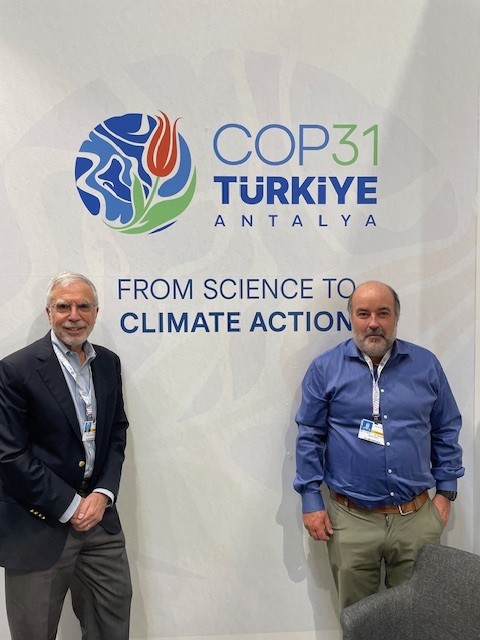
Wednesday, November 18th, 1:00-2:30 pm. I moderated and presented along with Daniel Jacob in a Panel Session, “Reducing Methane Emissions: Abatement Costs in the Oil and Gas Sector,” in the IETA Pavilion. This described in detail econometric work I’m doing with HKS Professor Joe Aldy and PhD student Tracy Zhou.
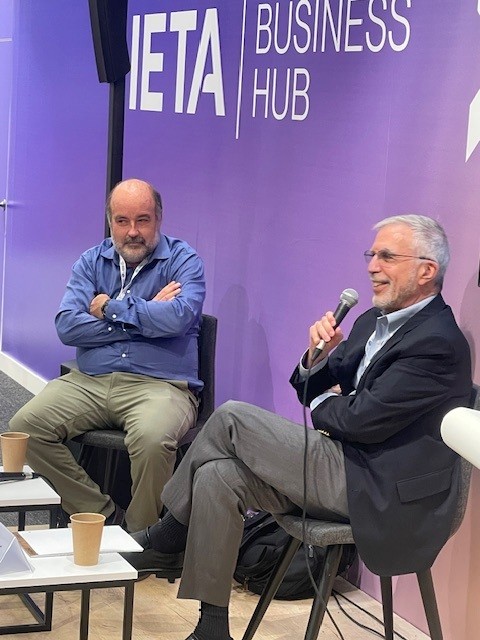
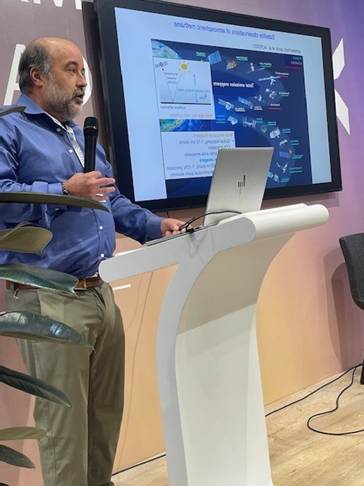
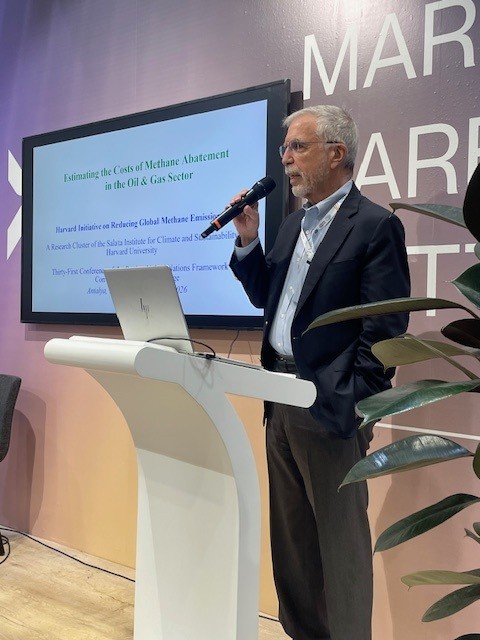
Thursday, November 19th, 2:00-3:00 pm. I participated in a “Fireside Chat” about the “Role of University Research and Outreach in Climate Change,” Council of Higher Education of Türkiye.
Thursday, November 19th, 4:45-6:15 pm. I moderated and presented with Daniel Jacob in Harvard’s official Side Event, “Quantifying and Communicating Methane Emissions for NDCs and the Global Methane Pledge.”